

If 2026 has felt stressful to you, you’re certainly not alone. A recent survey from Talker Research asked Americans to choose one word to describe the year so far. The most common answer was “stressful.”
With so much uncertainty in the news, it’s understandable that some people are postponing their plans to buy or sell a home. They’re waiting for things to settle down before making such an important decision.
But when it comes to housing, the market may already be more stable than you realize.
Despite headlines that continue to raise concerns about a possible housing crash, the actual numbers tell a much calmer story.
Home Prices Have Leveled Out
Following several years of unusually rapid appreciation, home-price growth has slowed considerably.
According to data from the National Association of Realtors, national home prices have remained remarkably steady over the past four years.
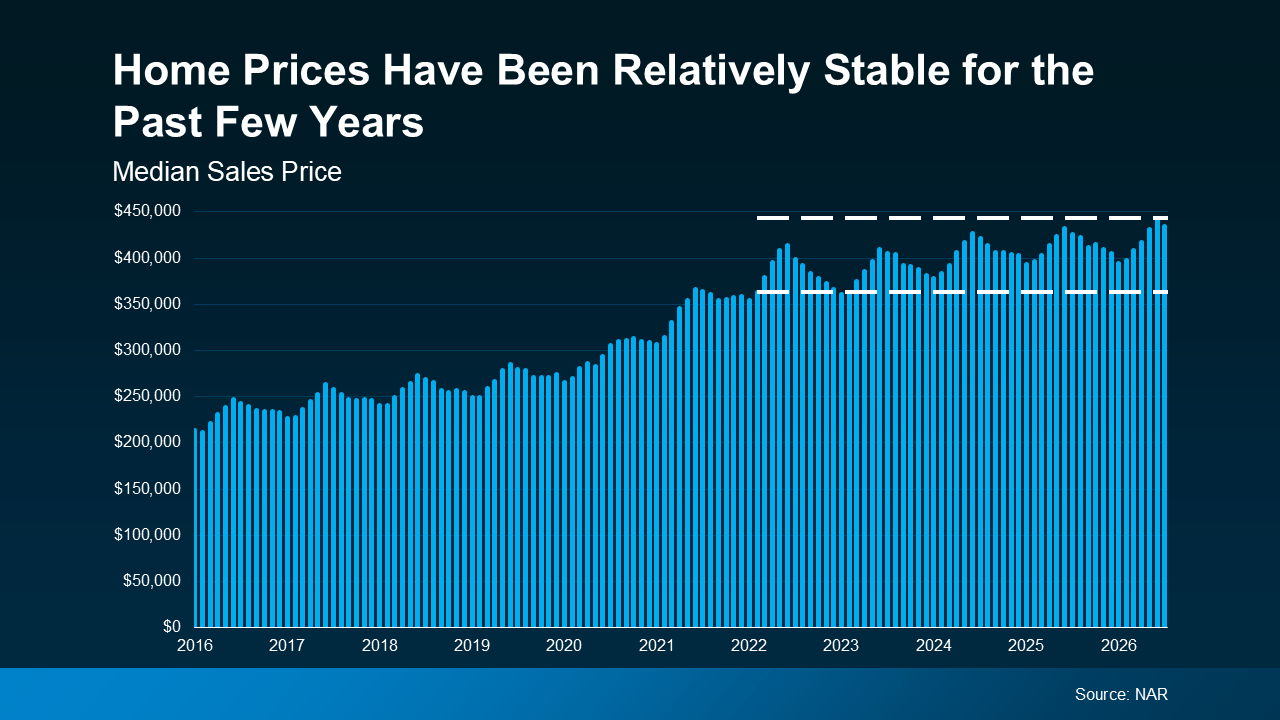
That is not what a housing crash looks like.
Instead of experiencing dramatic increases or widespread declines, the national housing market has moved into a period of slower, more sustainable growth.
Selma Hepp, Chief Economist at Cotality, explains:
“In 2026, we expect home prices to remain broadly stable, with modest appreciation at a national level.”
That kind of stability is generally a sign of a healthier and more balanced housing market.
Of course, real estate is always local. Home values can behave differently from one city, price range, and neighborhood to another. Here in Parker and throughout the Denver metro area, buyers and sellers need to look at current local sales—not just national headlines—to understand what is happening.
The Supply of Homes Has Also Stabilized
Housing inventory changed dramatically during and immediately after the pandemic. The number of available homes fell to extremely low levels and then gradually began recovering.
Now, according to Realtor.com, the number of homes for sale nationally is very close to where it was at this time last year.
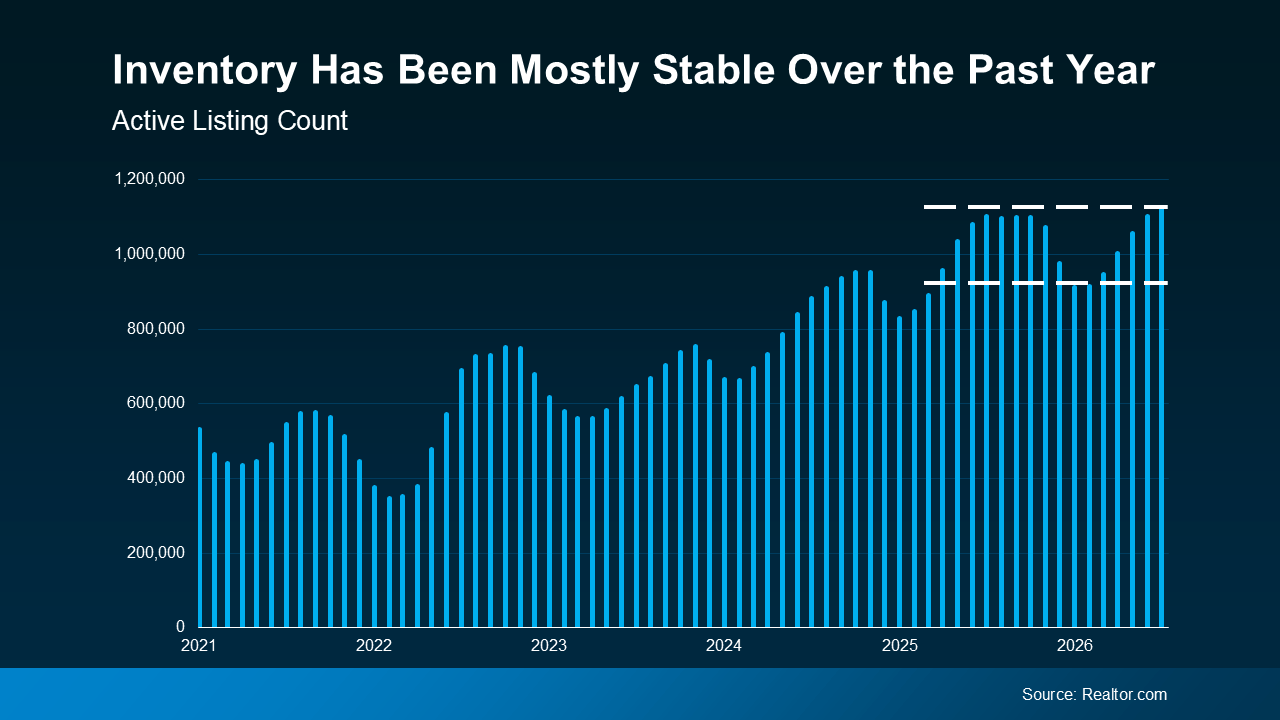
A steadier supply of homes gives both buyers and sellers a clearer idea of what to expect.
Buyers may have more choices and more time to make careful decisions than they did during the highly competitive pandemic market. Sellers, meanwhile, have a better understanding of how much competition they may face and why accurate pricing, condition, presentation, and marketing are so important.
This doesn’t mean every home will sell quickly or that every buyer will have unlimited negotiating power. It means the market is becoming more predictable—and that is good for everyone.
Mortgage Rates Have Found a Range
There’s no question that mortgage rates increased dramatically in 2022. That sudden change affected affordability and caused many buyers and sellers to reconsider their plans.
Since then, however, rates have generally remained within a more consistent range. Data from Freddie Mac shows that mortgage rates have stayed mostly between 6% and 7% for approximately the past three years.
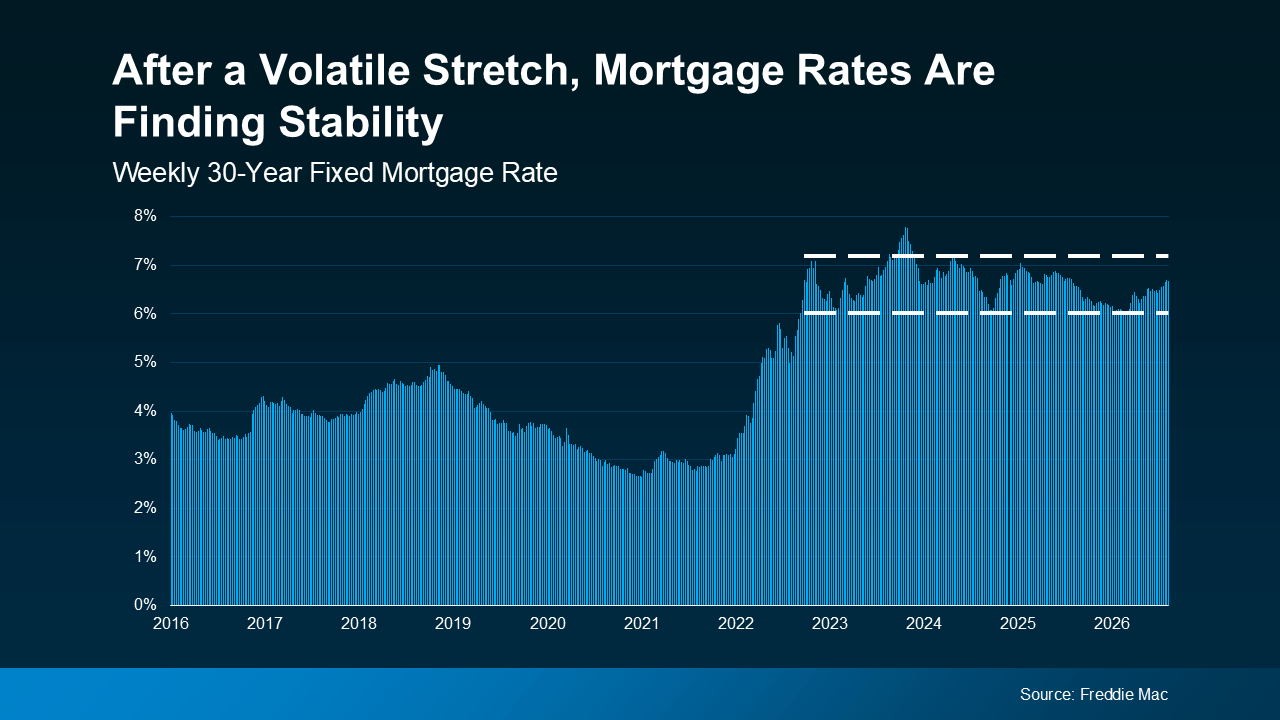
There was a brief period when rates moved above that range, but overall, the market has had time to adjust.
Buyers are learning how to purchase homes in today’s interest-rate environment, sometimes using rate buydowns, adjustable-rate mortgages, larger down payments, or seller concessions to improve affordability.
Sellers are adjusting too. Many understand that today’s buyers are payment-conscious and that a home must be priced correctly to attract serious attention.
The important point is that the housing market is not frozen. People are still buying and selling homes because families continue to grow, jobs change, retirees downsize, and people relocate to be closer to children and grandchildren. Life doesn’t always wait for the “perfect” market.
Why Today’s Market Is Different from 2008
Many people hear the words “housing slowdown” and immediately think about 2008. But today’s market is fundamentally different.
Most homeowners have substantial equity, lending standards are considerably stronger, and the country does not have the same combination of risky mortgages, excessive overbuilding, and distressed properties that contributed to the last housing crash.
Today’s market certainly has challenges, but slower sales and more balanced conditions do not automatically signal a crash. In many cases, they simply indicate that the market is returning to a more normal pace.
The Bottom Line
The world may feel unpredictable, but the housing market is more stable than many headlines suggest. Home prices have leveled out, inventory has steadied, and mortgage rates have remained within a relatively consistent range.
That doesn’t mean every home will increase in value or that every local market will perform exactly the same. It does mean the numbers do not support the idea that a nationwide housing crash is right around the corner.
If you’ve been waiting for greater stability before buying or selling, it may already be here.
At the Parker Colorado Home Center, we can help you understand exactly what is happening in Parker, Castle Rock, Franktown, Elizabeth, Highlands Ranch, Centennial, Aurora, or your particular neighborhood. Contact Bob and Cheryl Bustin, and let’s talk through your situation, your timing, and whether making a move now makes sense for you.